

Pitched Roof Types: A Colorado Springs Homeowner’s Guide
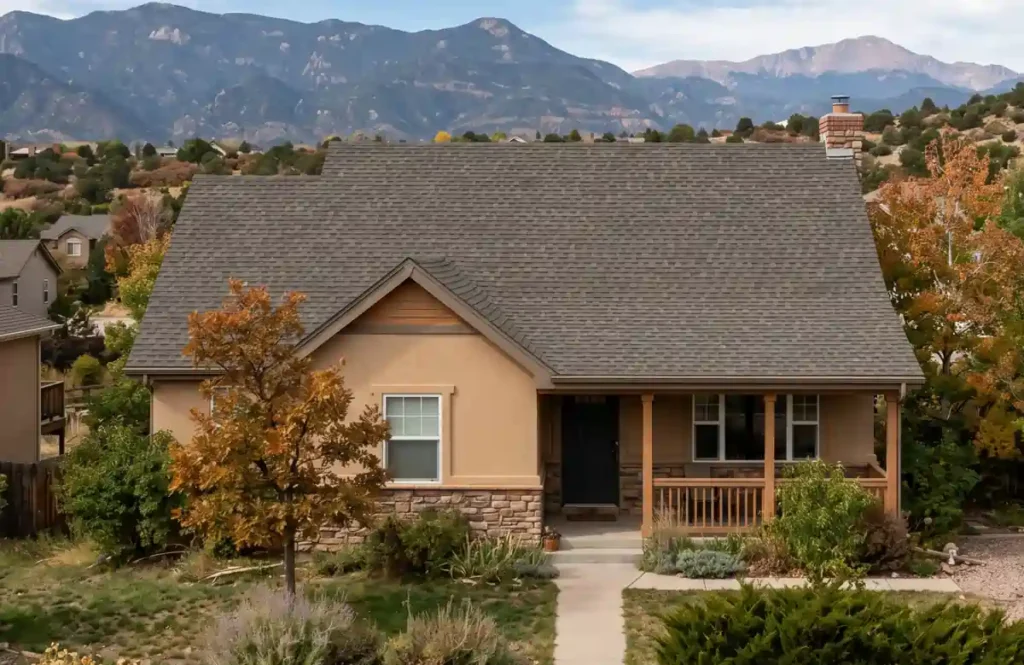
Your roof’s pitch and design affect how well it handles the elements. Ignoring it can be an expensive mistake in Colorado Springs, where hailstorms, heavy seasonal snowfall, and strong chinook winds are unavoidable.
At Bumble Roofing, we inspect and replace pitched roofs throughout the Pikes Peak region and have seen firsthand how different roof designs hold up over time. If you’re researching roof replacement options or trying to understand an inspection report, this guide explains what a pitched roof is, the most common types of pitched roofs, and which designs perform best in Colorado Springs.
What Is a Pitched Roof?
A pitched roof is any roof with a slope greater than 2:12, meaning the roof rises more than 2 inches for every 12 inches of horizontal distance. Unlike flat or low-slope roofs, pitched roofs efficiently shed water, snow, and debris.
How Roof Pitch Is Measured
Contractors and insurance adjusters typically express a pitch using an X:12 format.
| Roof Pitch | Approximate Angle |
| 4:12 | 18.4° |
| 6:12 | 26.6° |
| 12:12 | 45° |
Roof pitch uses a simple rise-over-run formula. For every 12 inches of horizontal distance, the roof rises a certain number of inches.
For example:
- 4:12 pitch = rises 4 inches per foot
- 6:12 pitch = rises 6 inches per foot (standard for most homes)
- 8:12 pitch = rises 8 inches per foot
Pitched vs. Flat Roof — The Key Difference
Flat roofs are technically low-slope roofs with pitches below 2:12. They require specialized materials such as TPO, EPDM, or modified bitumen systems.
In contrast, pitched roofs naturally shed water and snow. That’s one reason they’re the dominant residential roof style throughout Colorado Springs. Heavy snow accumulation and ice buildup create greater challenges for low-slope roofing systems.
Tip: If you’re comparing roof designs for local weather conditions, speak with a qualified Colorado Springs roofing services provider to understand which option makes the most sense for your property.
The 6 Most Common Pitched Roof Types
Gable Roof
A gable pitched roof features two sloping sides that meet at a central ridge, creating a triangular end wall. With a typical pitch of 4:12–12:12 and cost-effective construction, the pitched gable roof is the most common residential roof style in the United States. However, gable roofs can be more vulnerable to wind uplift if gable ends are not properly braced.
Hip Roof
A hip roof slopes downward on all four sides, eliminating vertical gable ends. With a typical pitch of 4:12–6:12, it offers superior wind resistance and even snow distribution. For homes in exposed neighborhoods or higher elevations, hip roofs often perform better than traditional gable designs.
Shed Roof (Skillion)
A shed roof consists of a single sloping plane with one side higher than the other. With a typical pitch of 1:12–12:12, it’s commonly used on home additions, porches, and modern-style homes. Proper ice-and-water shield installation is essential in Colorado Springs, as lower-pitched shed roofs can be prone to ice accumulation along the eaves.
Mansard Roof
A mansard roof features two slopes on all four sides. The lower slope is steep (typically between 60° and 80°), while the upper slope is much flatter (2:12–4:12). This design provides a distinctive architectural style and maximizes usable attic space. However, the flatter upper section can hold snow and ice, making waterproofing and routine inspections especially important in Colorado Springs.
Gambrel Roof
Often called a barn roof, a gambrel roof has two slopes on each side. The lower section is steep while the upper section is shallower, providing a classic appearance and adding additional usable interior space.
Jerkinhead Roof (Clipped Gable)
A jerkinhead roof combines features of both gable and hip roofs. The gable ends are clipped, creating short hip sections.
With a typical pitch of 4:12–8:12, the jerkinhead roof design provides better wind resistance than a standard gable and strong snow-shedding performance.
How a Pitched Roof Is Built
Understanding pitched roof construction helps homeowners make sense of inspection reports and replacement estimates.
Rafters vs. Pitched Roof Trusses
Rafters are individual framing members cut and installed on-site. They provide flexibility and can make future attic conversions easier.
A pitched roof truss is a pre-engineered structural assembly manufactured off-site and delivered ready for installation.
Trusses are the most common framing system used in Colorado Springs residential construction because they are faster to install and structurally efficient.
Sheathing and Underlayment
Roof sheathing forms the structural deck to which roofing materials attach. Most homes use OSB or plywood panels installed over rafters or trusses.
Underlayment sits between the roof deck and the finished roofing material. It serves as a secondary moisture barrier if shingles become damaged.
In Colorado Springs, ice-and-water protection near roof edges is especially important due to snowmelt and freeze-thaw cycles.
When these components fail, roof leaks often follow.
How Pitch Affects Material Selection
The steeper the pitch, the more roofing material options are available.
General guidelines include:
- 2:12–4:12: Low-slope systems and specialty shingles
- 4:12+: Standard shingle roofing and metal roofing
- 6:12+: Wood shake, tile roofing, slate, and other premium materials
Which Pitched Roof Type Works Best in Colorado Springs?
Some pitched roof designs perform better than others in Colorado Springs’ climate.
Best for Hail Resistance
Steeper roofs experience less visible hail damage than shallow-slope systems. A 6:12 or steeper gable or hip roof paired with Class 4 impact-resistant shingles is often the most practical combination for local conditions.
Best for Snow Load
Colorado Springs receives approximately 32.5 inches of snow annually. Steeper hip roofs distribute snow more evenly across all sides of the structure, which can help reduce concentrated runoff and gutter stress.
For those evaluating drainage on their property: proper gutter installation is just as important as roof design.
Best for Wind Exposure
Colorado Springs’ elevation and frequent chinook winds create challenging conditions for certain roof designs. Hip roofs and jerkinhead roofs generally outperform traditional gable roofs in high-wind environments because they reduce the amount of vertical surface area exposed to wind.
FAQs — Pitched Roofs
What is the most common pitched roof type for homes in the U.S.?
The gable roof is the most common residential roof style in the United States. Its simple design, affordability, and ability to shed rain and snow make it a popular choice throughout Colorado Springs as well.
What pitch is considered a pitched roof?
A roof is generally considered pitched when it has a slope greater than 2:12. Roofs below that threshold are classified as low-slope or flat roofs and require different roofing materials.
Are pitched roofs better for snow than flat roofs?
Yes. Pitched roofs allow snow to slide off naturally, reducing the risk of heavy accumulation. In Colorado Springs, steeper pitches generally provide better long-term snow performance.
What is a pitched roof truss?
A pitched roof truss is a factory-built structural framework designed to support the roof system. Trusses are engineered for specific spans and loads and are commonly used in modern residential construction.
Which pitched roof type is best for hail in Colorado Springs?
A hip or gable roof with a pitch of 6:12 or greater and Class 4 impact-resistant shingles is one of the most effective combinations for managing hail exposure in Colorado Springs.

Roofing, the Easy Way
Get Estimate
