

Types of Commercial Roofing: Pros, Cons, and Ideal Applications
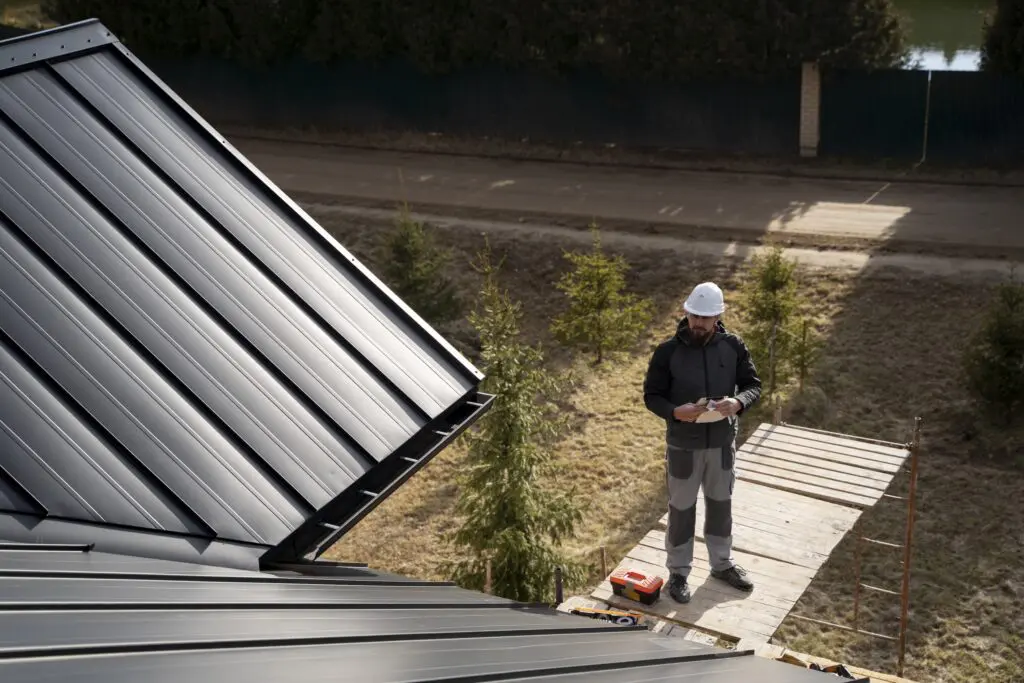
We get this call more than you’d think. Someone’s dealing with a leak, they want a number, and then about five minutes in they mention, almost as a side note, that they’re not actually sure what type of roof is up there. Flat, probably. Grayish maybe.
Nobody’s embarrassed about that. Commercial roofing just isn’t something you think about until water shows up where it’s not supposed to. The problem is, not knowing what you have causes real downstream issues: wrong materials get quoted, installation shortcuts slip through, and a roof that should have held up for 25 years starts creating problems well before the halfway mark.
So we wrote this out. Every major system, what it actually does, where it holds up, where it tends to fail, and what repair looks like down the road. Read it once and you’ll have enough to hold a real conversation with a contractor, enough to tell when you’re getting a straight answer versus a convenient one.
The Short Answer: Which System Fits Your Building?
Before we get into it, here’s a table that matches common building situations to the system that tends to make the most sense. It’s not a replacement for walking the roof and doing a real assessment, but it cuts through a lot of noise early.
| Building Situation | Best Roofing System | Approx. Lifespan | Key Advantage |
| Large flat warehouse or retail | TPO Membrane | 20-30 years | Cuts cooling costs with reflective surface |
| Restaurant or manufacturing plant | PVC Membrane | 20-30 years | Holds up against grease and chemicals |
| Building a plan to own long-term | Standing Seam Metal | 40-70 years | Lowest cost per year over full lifespan |
| Roof with regular foot traffic | Modified Bitumen | 15-25 years | Resists puncture and physical wear |
| Sloped roof, tight upfront budget | Architectural Shingles | 20-30 years | Easiest on the initial invoice |
| Hotel, upscale office, mixed-use | Clay or Concrete Tile | 50-100 years | Character and longevity, nothing else matches |
We’ll dig into each of these below.
What Does ‘Commercial Roofing System’ Actually Mean?
When people think about their roof, they picture whatever’s visible from the ground: the white membrane, metal panels, shingles. That’s the top layer. But there are two more underneath it that almost never come up in early conversations, and they matter just as much.
At the bottom you’ve got the structural deck, which is the foundation everything bonds to. Above that is the insulation assembly, which handles thermal performance and gives the membrane something solid to bond to. Then comes the waterproof covering itself. All three have to work together. A high-end TPO membrane installed over weak, undersized insulation will underperform. A standing seam metal roof put in by a crew that learned on the job will develop problems even if the material could theoretically last 50 years.
Put the same membrane on two identical buildings and the roofing material can age on completely different timelines depending on what’s below it and who did the work. That’s usually the piece owners learn about too late to make a different choice.
Flat Roof Membrane Systems: What Most Commercial Buildings Actually Have
Most commercial buildings in the U.S. have flat roof or close to it, so the majority of property owners end up comparing membrane options. There are four main types. They sound similar but behave pretty differently in practice.
TPO: The One You’ve Probably Heard the Most About
TPO is the most commonly installed commercial membrane in the country right now. White or light-colored surface, reflects solar heat instead of pulling it in, HVAC runs less in summer. On a large warehouse or retail building, those energy savings add up to a real number over time.
Seams are heat-welded rather than glued. A properly welded TPO seam is actually stronger than the membrane on either side of it. That’s not a sales pitch, it’s just the physics of how thermoplastic bonds. What it means practically is fewer leaks starting at seams, which is where most membrane roofs eventually give out.
Quality is all over the place. There are TPO products built to last and ones that cut corners on thickness and material composition; they look identical on installation day. Stick with a manufacturer that’s been around, verify your installer is certified on that specific product line, and a 20 to 30 year lifespan is realistic. Skip one of those steps and you won’t make it halfway there.
Best for: Warehouses, distribution centers, retail buildings, and flat-roofed offices where energy efficiency and value are the main priorities.
EPDM: The Old Reliable
EPDM has been going on commercial roofs since the 1960s, and that longevity is not a throwaway fact. It means there are contractors who’ve been working with this material for their entire careers. They know where it fails, how it ages in different climates, and what a repair actually needs to hold. You don’t get that institutional knowledge with products that have only been around for ten or fifteen years.
The sheets run large, so seam count is low. Fewer seams means fewer entry points, which is really where most membrane failures start. Black absorbs heat, and that’s a real drawback in Texas summers, though reflective coatings help and they hold up well, but it’s worth knowing upfront. Up north where freeze-thaw cycling is the main enemy, EPDM has decades of proven performance in exactly those conditions.
One thing to know about repairs: EPDM patches are adhesive-based, which means surface prep and dry conditions actually matter. It’s not a difficult fix, but it’s one where rushing it or skipping the prep step tends to result in the same call twelve months later.
Best for: Cooler-climate buildings where long-term durability and a proven track record outweigh the need for a reflective surface.
PVC: The One Restaurants Actually Need
PVC membranes were built to solve a problem TPO and EPDM can’t handle: grease. Restaurant exhaust, food processing chemicals, industrial runoff from rooftop equipment, all of those things break down standard membranes faster than you want to deal with. PVC was engineered from the start with chemical resistance as a core requirement, and it’s the go-to spec for any building where rooftop grease exposure is part of normal life.
PVC seams also hold up exceptionally well against wind uplift. In areas where high-wind events are a real concern, that’s worth something.
Cost is the sticking point. PVC runs higher than TPO at installation, sometimes by a meaningful margin. But if you own a restaurant and you put TPO on the roof to save money upfront, you’ll be replacing it years ahead of schedule because the grease degrades it. In that situation, PVC is actually the cheaper choice when you run it out over ten years.
Best for: Restaurants, commercial kitchens, food processing, and manufacturing facilities where chemical or grease exposure is part of daily operations.
Modified Bitumen: Built for Roofs That Get Walked On
Modified bitumen is the oldest of the modern membrane systems. It’s thick, it’s heavy, and it handles foot traffic in a way that single-ply membranes simply don’t. If maintenance crews, HVAC techs, and electricians are regularly up on your roof, that physical durability is genuinely valuable and it’s not something you can replicate with a thinner product.
It’s an older technology, and it shows in some areas. Reflectivity isn’t great by default, though coatings address that. You’re not getting the material science improvements baked into newer membranes. That said, if people are regularly up on your roof (HVAC crews, electricians, maintenance staff), the durability difference is tangible. Same goes if you’re in a market where most roofing contractors came up on asphalt systems and single-ply is newer territory for them. In those situations, mod bit is still a legitimate, well-understood option.
Best for: Buildings with frequent rooftop maintenance activity, equipment-heavy roofs, or anywhere puncture resistance matters more than peak thermal performance.
Metal Roofing: The Math Changes When You’re Staying Long-Term
Standing seam metal roofing costs more to install than any membrane option. That’s just true. The math changes when you extend the time horizon. A standing seam roof that’s installed right can realistically go 40 to 70 years. Run the cost-per-year numbers over that span and metal often comes out cheaper than the options that seemed affordable at install. The money’s spent upfront instead of spread out. That’s the trade-off.
Panels run from ridge to eave and connect through hidden clips underneath the surface. No exposed fasteners penetrating the roof from above. It’s worth pausing on that. Exposed fasteners are responsible for a significant number of the long-term leaks we see on commercial roofs; the seal degrades, the screw shifts slightly over years of thermal movement, and eventually water finds the gap. Standing seam eliminates that failure mode entirely.
Solar is worth mentioning too. Clamp-on mounting hardware attaches directly to the seams without cutting a single hole in the roof. If there’s any realistic chance of adding solar in the next couple of decades, standing seam is the only roofing system that handles it cleanly.
Best for: Offices, medical buildings, retail showrooms, and any commercial property where the long game justifies paying more upfront to spend far less over the next 40 years.
Asphalt Shingles on Commercial Buildings: More Common Than You’d Think
Plenty of people don’t realize architectural shingles aren’t only residential. Office parks, retail strips, mixed-use buildings, clinics and professional spaces housed in residential-style structures, these all frequently have pitched roofs where quality shingles are a completely legitimate commercial option. Premium grades carry Class 4 impact ratings and wind certifications that hold up to serious weather. Repairs are straightforward because any competent roofer can handle them without specialized equipment.
The one real limitation is slope. Shingles need gravity to drain properly. Below roughly a 2:12 pitch, water won’t move fast enough and you’ll have problems. If your building is flat, this category doesn’t apply. But if you’ve got a genuine pitched roof and your budget is tight, don’t let anyone talk you into a membrane system you don’t need because it sounds more official.
| Keep in mind: shingle lifespan runs 20 to 30 years, which is shorter than metal or tile. The lower upfront cost comes with a shorter replacement cycle, so factor that into the full picture before you decide. |
Best for: Low-rise commercial properties with genuine slope where the upfront budget is the primary driver and the owner accepts a 20 to 30 year replacement cycle.
Tile Roofing: When the Building Itself Needs to Communicate Something
Tile is partly an aesthetic decision and there’s no point pretending otherwise. Clay tile on a hotel, an upscale restaurant, a professional office campus, it’s part of what those buildings are saying to people walking in. Nothing else replicates that look, and for certain property types in certain markets, that matters as much as any performance spec.
The performance side of clay is genuinely strong. Service lives in the 75 to 100 year range happen in the real world, not just in spec sheets. It doesn’t burn, doesn’t rot, and the color stays true because it’s fired into the material rather than painted on. Two things to plan around: it’s heavy enough that you need a structural assessment before committing, and individual tiles can crack under direct hail hits. Neither is a reason to rule it out, just things to account for before you sign anything.
Concrete tile gets you a similar look at a lower entry point. Lifespan drops to roughly 30 to 50 years, and concrete absorbs slightly more moisture than clay which causes some color shift over time. In high-wind environments, the weight actually works in your favor by resisting uplift.
Best for: Hotels, restaurants, upscale offices, and mixed-use developments where appearance is part of the building’s value and the structure can handle the load.
Commercial Building Roof Repair: Where the Leaks Actually Come From
Most roofing guides move past this quickly. We think it’s one of the more useful sections.
Go look at a leaking commercial roof sometime. Find the water intrusion inside and then go up top to trace it back. It’s almost never the open field of membrane in the middle of the roof. It’s almost always one of these spots:
- Flashing where the roof surface meets a parapet wall, curb, or vertical transition
- Pipe boots, HVAC curb edges, drain collars, conduit penetrations, any spot where something comes through the roof
- Seam or edge separations, usually from years of the roof expanding and contracting with temperature changes
- Ponding areas where water sits and never fully drains, slowly working on whatever membrane is underneath
What this means practically: the quality of the installation, specifically how well the contractor handles flashings and penetrations, matters more to your long-term results than the material itself. We’ve seen mid-grade membranes installed by a careful crew outperform a premium product put in by people who rushed the details. It happens more than you’d expect.
How Repairs Work Across Different Systems
Repair characteristics vary more than people expect between systems, and it’s the kind of thing worth knowing before you choose one.
TPO and PVC repairs involve heat-welding a patch over the damaged section. Done correctly, the bond is actually as strong as the surrounding membrane, and any contractor who works with these systems regularly can handle it without specialized equipment. EPDM: adhesive patch, works well with proper prep, needs dry conditions. Also straightforward for any contractor who knows the system.
Modified bitumen: traditional torch-down patching, standard equipment, most flat-roofing contractors have done it hundreds of times. Metal: usually re-seaming or sealant renewal at penetrations, occasionally panel replacement after bad hail. That last one really does require someone who knows metal systems specifically, not just a general roofer. And shingles are the simplest of all. Lift the damaged section, swap out what’s bad, nail it back down. Afternoon job for anyone competent.
Repair vs. Replace: How to Actually Tell the Difference
Repair is usually the right call when the problem is genuinely isolated. One flashing failure, one penetration that’s lost its seal, one small membrane tear with the rest of the roof in good shape. If the system is under 15 years old and you haven’t been through this before with the same roof, repair almost always makes sense.
Start having the replacement conversation when you’re fixing the same spots more than once. One repair is a repair. Three repairs in the same spot isn’t bad luck, it’s a sign that something structural is wrong and patching isn’t going to solve it. A few other things that shift the conversation toward replacement: roofs past 20 years with no major work done, infrared scans that come back showing moisture in the insulation layer below the membrane (wet insulation drags down everything above it as it deteriorates), and maintenance costs that keep going up year over year with no clear end in sight. At some point, you’re spending more keeping a dying roof alive than a new one would cost amortized over its life.
How to Actually Pick the Right System
Start with the building, not a preference. Let what the structure needs eliminate the wrong options first, then compare what’s left against your budget and timeline.
Slope comes first. Flat or low-slope roof means you’re in membrane territory, full stop. A pitched roof opens up metal, tile, and shingles as realistic options alongside membranes.
Think about how the building actually operates. Does rooftop grease or chemical exposure happen? PVC. Do maintenance crews and contractors walk the roof regularly? Modified bitumen or metal. Is it a standard warehouse or office with no unusual demands? TPO is a reasonable default to start from.
How long do you plan to own the building? If you’re selling in five years, the math on a 50-year metal roof doesn’t really work in your favor. If this is a long-term hold or a family asset, skimping on the roof upfront usually costs more over time.
Climate matters more than people think. In hot southern markets, reflectivity is worth paying for. In northern climates with real freeze-thaw winters, durability over time is often more valuable than energy efficiency.
And do both budget calculations. Upfront cost is one number. Lifecycle cost over 20 or 30 years is a different number that often tells a completely different story about which option is actually cheaper.
Work through those and you’ll usually find two or three options that make real sense for your situation. That’s when to get bids, not before.
Questions We Hear All the Time
| What is a commercial roofing system? | It’s a three-layer assembly: structural deck on the bottom, insulation in the middle, waterproof covering on top. All three have to work together. A great membrane over bad insulation will still let you down, and that’s where a lot of building owners get surprised. |
| Which commercial roofing system lasts the longest? | Standing seam metal and clay tile are in their own category. Metal runs 40 to 70 years, clay tile can go 75 to 100. TPO and PVC membranes typically last 20 to 30 years if they’re well maintained. Modified bitumen and shingles are generally in the 15 to 25 year range. |
| What’s the best roofing material for a flat commercial roof? | TPO is the right starting point for most flat buildings. It’s energy-efficient, cost-effective, and contractors know the system well. If you have grease or chemical exposure, switch to PVC. In colder northern climates where reflectivity matters less, EPDM has a track record that’s hard to beat. |
| What are the most common commercial building roof repairs? | Flashing failures. Penetration leaks around HVAC curbs, pipes, and drains. Seam separations at the edges. The field membrane in the middle of the roof almost never fails first. It’s always the connection points. |
| What commercial roofing material types are available? | For flat roofs: TPO, EPDM, PVC, and modified bitumen. For sloped structures: standing seam metal, clay tile, concrete tile, and architectural asphalt shingles. The right category depends on your roof’s slope before anything else. |
| How do I know whether to repair or replace? | Repair if the damage is isolated to one or two spots and the rest of the membrane looks decent. Start seriously thinking about replacement if the same spots keep coming back, if the roof is past 20 years, or if an infrared scan shows the insulation underneath is holding moisture. |
To Wrap It Up
A commercial roof isn’t just something that keeps the rain out. It’s directly tied to your energy costs every month, how hard your HVAC system works, whether your building’s interior environment stays stable, and what you’re spending on maintenance every year. Most of that connection is invisible until something breaks.
Getting the right system on a building depends on three things working together: the right material for the situation, the right insulation assembly underneath it, and a crew that actually knows how to install the specific system you’re putting on. Miss any one of those and the other two don’t save you.
We install all of the systems covered here. When we walk a building, we’re looking at what it actually needs, not what’s fastest to install or what carries the best margin. If you want to talk through your specific situation, reach out and we’ll take a look.
Related
Articles
Hail Damage Repair for Dallas Roofs: Costs, Process, and Expert Tips
What to Do After a Hailstorm: Essential Roof Repair Tips for Dallas Homeowners
Roof Replacement Cost in Dallas Explained: Factors, Pricing & Expectations
Roofing, the Easy Way
Get Estimate
